

In the global B2B spice trade, sourcing white pepper wholesale is not merely a transactionit is an exercise in supply chain risk management. For procurement managers, spice millers, and food manufacturers, importing bulk agricultural commodities involves navigating hidden variables that directly impact shelf-life, processing yields, and brand reputation.
While price fluctuations often dominate market discussions, the true profitability of an export white pepper contract is determined by three interconnected quality metrics: density, moisture, and piperine content. Miscalculating these variables results in container spoilage, flavor loss, or costly regulatory rejections at destination ports.
This expert guide analyzes these critical benchmarks from a procurement perspective and demonstrates how proper supply chain validation delivers premium white peppercorns to the global market.
The Strategic Importance of Quality Metrics in Bulk Sourcing
When evaluating an export white pepper offer, focusing solely on the price per metric ton is a common procurement pitfall. Premium white pepper whole berries are industrial raw materials; their physical and chemical profiles dictate their performance in automated grinding lines and food formulation matrixes.
Partnering with a transparent supplier that guarantees consistent physical specs allows buyers to:
- Prevent Container Sweat and Microbial Spoilage: Poorly dried white pepper undergoes respiration during long maritime transits, triggering mold growth.
- Optimize Processing Yields: Mature, high-density berries prevent excessive dust and volatile oil loss during industrial milling.
- Maintain Clean Label Standards: Eliminating off-odors and chemical contaminants ensures seamless clearance through strict customs frameworks (FDA, ESA, ASTA).
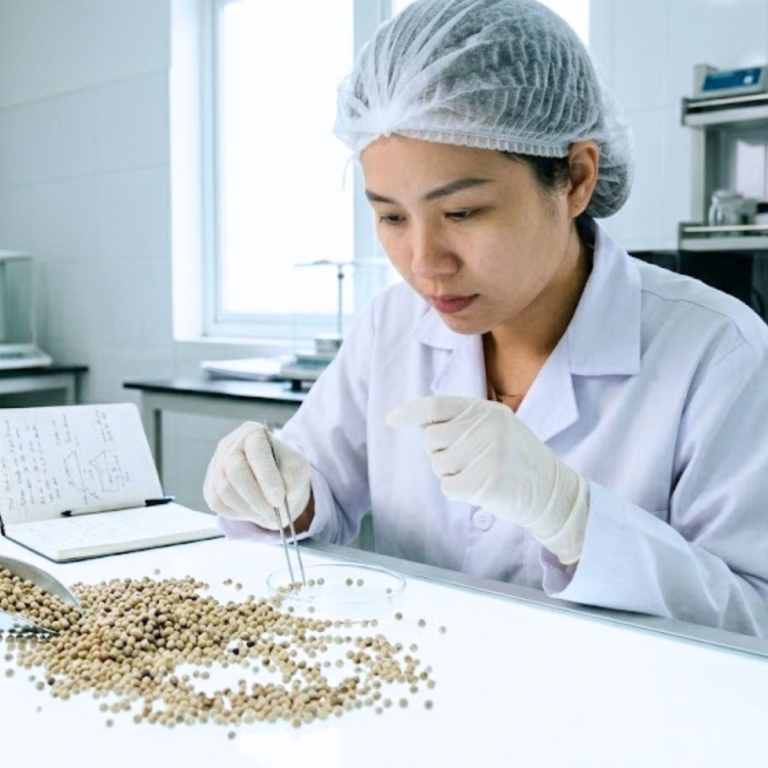
Evaluating bulk spice quality metrics and raw materials for global B2B procurement division
Deconstructing Critical Compliance Benchmarks: Chemical and Microbiological Hazards
To secure your supply chain and guarantee seamless market entry, your quality assurance (QA) team must look beyond physical appearance. Global spice procurement requires strict alignment on microbiological profiles, pesticide limits, and chemical contaminants to satisfy international food safety regulations (FDA, ESA, and ASTA).
1. Microbiological Analysis: Eliminating E. coli and Pathogens
Microbial contamination is the leading cause of border rejections in the global spice trade. White pepper wholesale shipments must undergo rigorous testing to ensure they are entirely free from pathogenic risks.
- E. coli and Salmonella: These organisms have a zero-tolerance threshold in enterprise food manufacturing. Reliable exporters utilize advanced steam sterilization (STV) lines to guarantee a clean microbiological profile without degrading the pepper’s volatile oils.
- Total Plate Count (TPC): Maintaining a low TPC is vital for industrial food processors to ensure the raw material does not introduce spoilage organisms into their finished food matrixes.

Microbiological laboratory analysis testing for E. coli and Salmonella pathogens in export white pepper wholesale
2. Yeast and Mold Counts: Preventing Mycotoxin Risks
Because the traditional processing of white pepper involves soaking the berries in water to remove the outer pericarp, managing Yeast and Mold Counts (YMC) is inherently more challenging than in black pepper processing.
- The Hazard: Elevated yeast and mold levels not only trigger accelerated product deterioration and off-odors but also risk the development of hazardous mycotoxins, such as Aflatoxin and Ochratoxin A.
- Procurement Standard: Buyers must demand validated lab reports proving that the YMC levels fall strictly within permissible industrial limits before the cargo is containerized.
3. Pesticide Residues (BVTV): Adhering to Strict MRLs
With global regulatory bodies continually tightening Maximum Residue Limits (MRLs), pesticide management is a non-negotiable metric for corporate spice portfolios.
- Compliance Protocol: Export white pepper lots must be systematically screened for agrochemical residues and Plant Protection Products (BVTV).
- Market Alignment: Partnering with a supplier that monitors farm-level applications ensures your cargo fully complies with European Spice Association (ESA) and American Spice Trade Association (ASTA) chemical frameworks, avoiding catastrophic compliance failures at destination ports.
>> RELATED ARTICLES:
- Black Pepper vs White Pepper – Processing, Grades, and B2B Sourcing
- Pearl Group Corporation Export Product
4. Heavy Metals: Monitoring Lead and Toxic Contaminants
Heavy metal bioaccumulation poses a severe threat to consumer safety and brand integrity. Contamination typically occurs due to poor soil conditions, contaminated processing water, or sub-standard milling equipment.
- Key Targets: Laboratory validation must specifically screen for trace elements of Lead (Pb), Cadmium (Cd), Arsenic (As), and Mercury (Hg).
- Risk Mitigation: Institutional buyers require complete chemical analysis certificates (COA) from accredited third-party laboratories (such as SGS or Eurofins) to confirm that heavy metal concentrations are well below international safety thresholds.
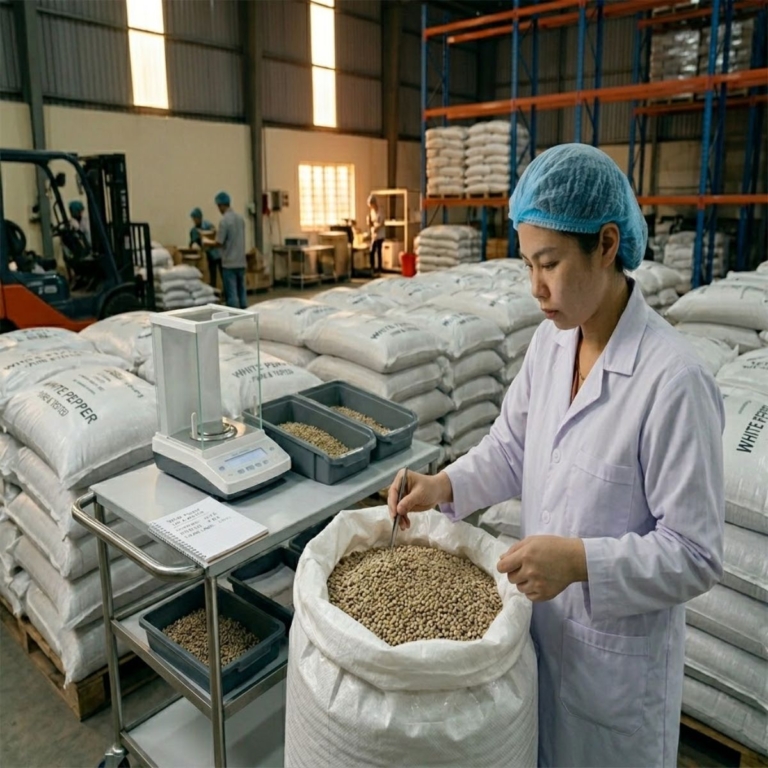
Screening for heavy metals and toxic contaminants including Lead and Cadmium in premium white peppercorns
Pearl Group Corporation: Institutional Infrastructure for Global Supply Chains
When de-risking your spice portfolio, partnering with a seasoned, vertically integrated market leader is paramount. Pearl Group Corporation, established in 2006 and headquartered in Ho Chi Minh City, Vietnam, stands as one of the premier manufacturers and exporters of pepper and spices in the region.
Unrivaled Volume Capabilities and Global Footprint
For enterprise buyers requiring high-volume consistency, the corporation offers institutional stability:
- Annual Export Volume: Shipping between 25,000 to 28,000 tons of high-grade spices yearly.
- Total Processing Capacity: Reaching 35,000 to 40,000 tons per annum.
- Global Reach: Trusted by buyers across more than 100 countries, including major demanding markets such as the United States, Europe, India, China, the Middle East, Japan, South Korea, and Australia.
World-Class Compliance and Certified Sustainability
The traditional “farmyard smell” found in low-grade white pepper—caused by soaking berries in stagnant water—is completely eliminated through advanced processing architecture. Pearl Group Corporation operates modern processing lines under strict international quality management systems, fully compliant with:
- Global Safety Standards: BRC, ISO 22000, HACCP, HALAL, KOSHER, and FSMA.
- Farm-to-Fork Traceability: Extensive investments in certified farming systems achieving EU Organic, USDA Organic, JAS Organic, and Rainforest Alliance compliance.
This rigorous framework ensures that every batch of white peppercorns delivers stable quality, uncompromised purity, and complete supply chain sustainability.
Conclusion: Optimize Your Spice Procurement Strategy
In the competitive landscape of food manufacturing and spice distribution, your raw material quality dictates your market position. Prioritizing high-density, low-moisture, and chemically vibrant white pepper whole lots is the only way to safeguard your brand from product recalls and yield losses.
By working with an institutional exporter that boasts a proven global track record, you secure not just a product, but long-term supply chain resilience.
Are you looking to upgrade your spice portfolio and secure a premium contract? Contact the B2B procurement division at Pearl Group Corporation today to discuss contract framing, request technical data sheets, and arrange for commercial product samples.
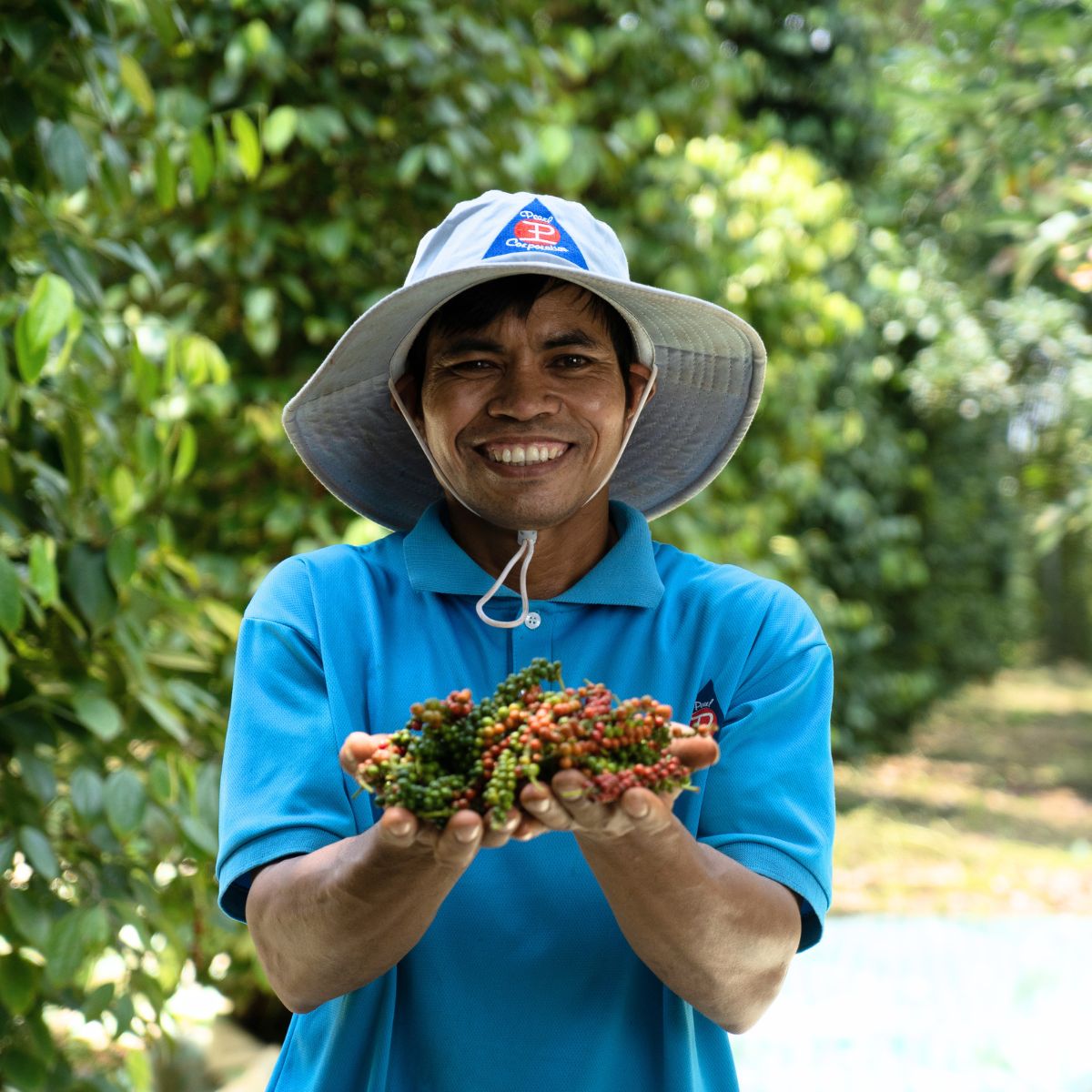
Optimized international B2B spice procurement and supply chain resilience contract with Pearl Group Corporation